نوع مقاله : مقاله پژوهشی
عنوان مقاله English
نویسنده English
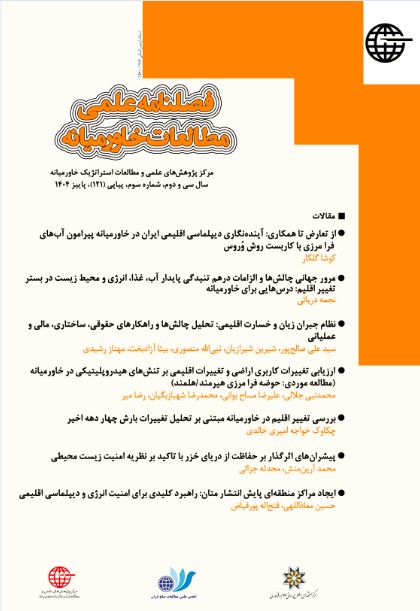
This study examines the relationship between climate change and water diplomacy in the Middle East and its implications for Iran. Recurrent droughts, declining precipitation, and rising temperatures have placed significant stress on renewable water resources, complicating their management. As a country dependent on key transboundary rivers—including the Helmand, Tigris–Euphrates, and Aras—Iran requires a forward-looking approach to water policy. Employing the Voros foresight method and its three-stage framework of analysis, interpretation, and prospection, this research identifies the megatrends, driving forces, and critical uncertainties shaping regional water diplomacy. Data were collected through environmental scanning, competitive analysis, and a comprehensive review of scientific literature, international reports, and environmental indicators. The findings outline four plausible scenarios for the future of Iran’s water diplomacy: sustainable cooperation, continuity of the status quo, escalating conflict, and climate-driven transformation. Results suggest that climate change, in addition to posing a serious threat to water security, may also create opportunities for regional cooperation, the development of climate-resilient technologies, and innovation in water governance—provided that Iran establishes robust legal frameworks, multilateral policies, and durable mechanisms for collaboration. The study underscores the importance of strategic planning informed by foresight to manage water resources and mitigate transboundary tensions.
کلیدواژهها English